Now Offering Yoga Nidra (NSDR)
I’m excited to announce that Yoga Nidra classes will begin at Amberlight Healing on October 5th.
If you’ve never experienced Yoga Nidra, you may be wondering what exactly it is. Often translated as “yogic sleep,” Yoga Nidra is a guided practice that brings the body into a state of profound relaxation while maintaining a degree of awareness. While it has roots in the yogic tradition, it is quite different from the physical practice of yoga and does not require any previous experience with yoga or meditation.
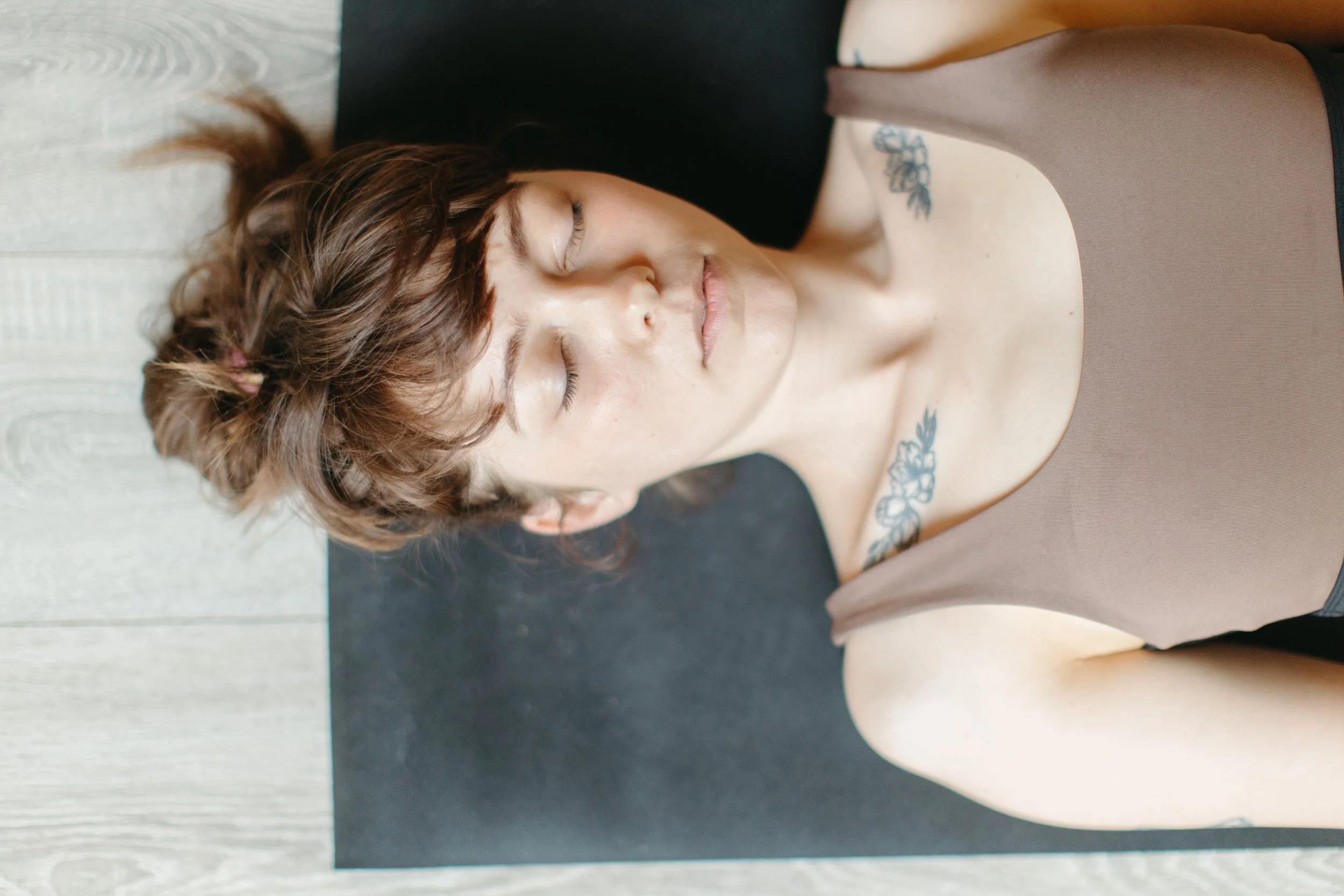
Yoga Nidra is practiced lying down in a comfortable position. Once you’re settled, I’ll guide you through a series of practices that bring your attention to the body, breath, sensations, and your internal experience.
Unlike some forms of meditation, there is no expectation that you clear your mind or maintain uninterrupted concentration. Your attention may wander, thoughts may come and go, and you may move in and out of deeper states of relaxation. You may even fall asleep. All of this is a normal part of the experience.
What happens as we move toward deeper relaxation?
One of the fascinating aspects of Yoga Nidra is the transition between waking and sleeping. As the body becomes increasingly relaxed, brain activity can begin to shift away from the faster beta activity associated with ordinary waking consciousness and toward slower alpha and theta activity associated with relaxation, meditation, and the early stages of sleep.
This is sometimes described as a state in which the body begins to sleep while the mind maintains a degree of awareness.
You may find yourself in that unusual space where you are deeply relaxed and feel as though you are somewhere between waking and sleeping. You can still hear my voice, but your sense of time may change, your body may feel very heavy or very light, and you may notice that thoughts become less organized or more dreamlike.
This deeply relaxed state is part of what makes Yoga Nidra so interesting from a nervous-system and learning perspective. Theta activity is associated with states in which the brain is highly receptive to internal experience and memory processing. Neuroplasticity—the brain’s ability to change and form new neural connections—is a complex process influenced by many factors, including sleep, learning, repetition, and emotional experience.
Rather than thinking of Yoga Nidra as simply “taking a nap,” it can be understood as an opportunity to enter a state of deep rest while maintaining enough awareness to engage with the practice. That combination of relaxation and awareness is one of the reasons Yoga Nidra has become so interesting in the fields of neuroscience, psychology, and contemplative practice.
Making space for rest
One of the things I appreciate most about Yoga Nidra is that it gives us an opportunity to intentionally step away from the constant activity of everyday life. We spend a great deal of time thinking, planning, working, caring for others, and responding to what is happening around us. For many people, simply being still without having something to accomplish can be surprisingly difficult.
Yoga Nidra provides a structured way to practice that kind of rest.
With regular practice, Yoga Nidra may support relaxation, stress management, improved sleep, and greater awareness of the connection between the body and mind. It can also be a useful complement to other practices that support overall well-being.
Classes at Amberlight Healing will be comfortable and accessible. Mats, blankets, and pillows will be provided, and I recommend wearing comfortable clothing. You are also welcome to bring an eye covering if you prefer to practice in complete darkness.
Classes will begin September 14th and will be $20 per person, with drop-ins welcome.
Once a month, I will also offer a Yoga Nidra class specifically for military members and first responders. This class will be offered by donation as a way to make the practice more accessible and to offer a dedicated space for those who regularly work in demanding and high-stress environments.
Whether you are completely new to Yoga Nidra or already have a practice, I hope you’ll consider joining me. Sometimes creating a little intentional space for rest can be just as valuable as everything else we make time for.